Get treatment for all your mental healthcare needs.
Our Services
Individual counseling and support to children and families
Counseling for academic concerns
Stress reduction
Anger Management
Domestic Violence
Alcohol Abuse Treatment
DWI Screening and Assessment
Department of Transportation Substance Abuse Professional (SAP)
Parenting workshops and family counseling
Health Education
Eye Movement Desensitization and Reprocessing
EMDR Consultation Services for Clinicians
EMDR and the Mapping Protocol ®
Mapping Therapy ®
Deportphobia ®
Biofeedback
Performance Enhancement (athletes, musicians, dancers, actors, employees, etc.)
Stress Management
Relaxation
Heart Rate Variability (HRV)
Anxiety
Post-Traumatic Stress Disorder (PTSD)
Attention Deficit & Hyperactivity Disorder (ADHD)
Dysthymia
Consejería individual y apoyo a niños y familias
Consejería para asuntos escolares
Reducción de Tension
Consejería para Controlar el Enojo
Prevención de Violencia Domestica
Tratamiento de Abuso de Alcohol
Evaluación de DWI
Department of Transportation Substance Abuse Professional (SAP)
Grupos de apoyo para padres y terapia familiar
Educación de Salud
Desensibilización y Reprocesamiento por el Movimiento de Ojos
EMDR and the Mapping Protocol ®
Mapping Therapy ®
Fobia de deportacion (deportofobia®)
Biorretroalimentación
Mejora del rendimiento (atletas, músicos, bailarines, actores, empleados, etc.)
Manejo del estrés
Relajación
Variabilidad de la frecuencia cardíaca (VFC)
Ansiedad
Trastorno de estrés postraumático
Trastorno por déficit de atención e hiperactividad
Distimia
Questions before getting started? Get in touch.
Training
COURSE 1:
Understanding Trauma and Alcohol Use among Undocumented Hispanic Immigrants and the Mapping Protocol
Presenter: Dr. Carmen Jimenez, Ed.D., LCSW-R, MPA, CASAC, SAP, BCB
Description of Course:
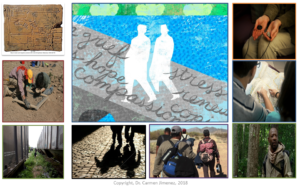
Recently arrived Hispanic immigrants who come to the United States are exposed to risks both in their native country and in the U.S. Moreover, many immigrants experience trauma while crossing illegally into the U.S. and are challenged in articulating traumatic events, high rates of binge drinking, driving without a valid license, and alcohol impaired driving among those who consume alcohol. To support effective interventions against these concerning trends, the Mapping Protocol® can be used to collect an interactive timeline and identify targets related to immigration and resettlement given the growing need for cultural sensitivity in evaluating clients with a history of relocation and understanding the immigration experience.
Learning Objectives:
• Understand the impact of trauma on relocation among documented and undocumented immigrants and the role of alcohol within this community
• Learn strategies to strengthen client communication
• List examples of exploring the history of relocation and alcohol abuse
• Identify methods of using the Mapping Protocol®
• Methods of using the Mapping Protocol® will be outlined
COURSE 2:
Understanding Trauma among Documented and Undocumented Hispanic Immigrants and the Mapping Protocol
Presenter: Dr. Carmen Jimenez, Ed.D., LCSW-R, MPA, CASAC, SAP, BCB
Description of Course:
The complexity of identifying traumatic memories associated with a journey from origination country to destination country may produce states of fear and challenges in articulating traumatic events. All this suggests the importance of targeting negative events with the use of the Mapping Protocol®, when words are simply not enough. As an adjunctive therapeutic technique, the Mapping Protocol® aids with the identification of these traumatic memories and facilitates the processing of a client’s immigration experience(s).
Learning Objectives:
• Understand the impact of relocation among documented and undocumented immigrants
• Understand the impact of trauma among documented and undocumented immigrants
• Learn strategies to strengthen client communication in a multicultural setting
• Identify methods of using the Mapping Protocol® effectively to reprocess trauma with populations who have a history of relocation

COURSE 3:
Understanding Trauma among Undocumented Immigrants: The Use of Eye Movement Desensitization and Reprocessing (EMDR) Therapy and the Mapping Protocol
Presenter: Dr. Carmen Jimenez, Ed.D., LCSW-R, MPA, CASAC, SAP, BCB
Description of Course:
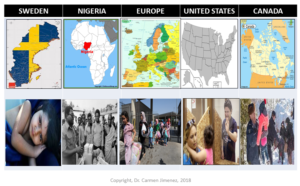
In the United States, the Hispanic immigrant population has grown exponentially within the past decade. Moreover, many Hispanic undocumented immigrants are exposed to extreme emotional and physical risks which include the separation from immediate family members, dangerous working conditions, financial debt, exposure to crimes, fear of deportation, high rates of binge drinking, alcohol impaired driving, and traumatic experiences associated with crimes that occurred in their native country or negative events linked to migration to other countries illegally. To support effective interventions against these concerning trends, the use of the Mapping Protocol® interfaced with the EMDR Adaptive Information Processing (AIP) Model can address negative events associated with trauma.
Learning Objectives:
• Understand the struggles leading to complex trauma among undocumented immigrants.
• Explain strategies to strengthen client communication in a multicultural setting and how the Mapping Protocol® is driven by the EMDR therapy AIP Model.
• Identify methods of using the Mapping Protocol® to reprocess trauma with populations who have a history of relocation.
• Explain each step of the Mapping Protocol® within the 8 phases of EMDR therapy as well as cognitive interweaves.
FOR MORE INFORMATION ON WORKSHOPS